
What Is Chiffon Fabric? A Complete Guide

Chiffon is one of the most enduringly popular fabrics in modest fashion, and for good reason.
It's light, it drapes beautifully, it takes colour and beadwork exceptionally well, and it's been prized for exactly these qualities for well over a century. Here's what chiffon actually is, where it comes from, why it remains such a considered choice, and how it shows up across Alkareem London's hijabs and abayas.
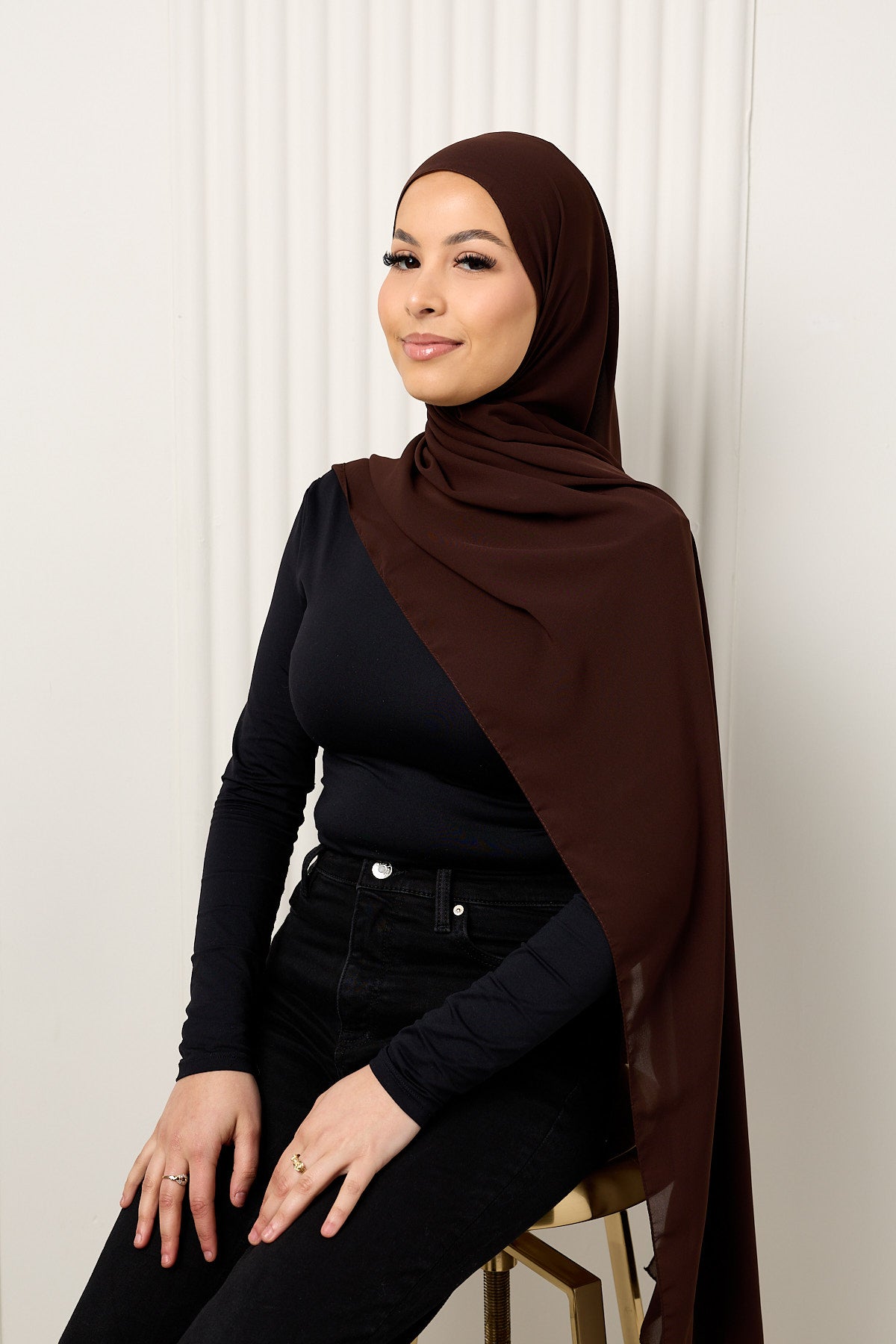
What Is Chiffon, Exactly?
Chiffon is a lightweight, sheer fabric with a plain weave, made distinctive by the way its yarns are twisted. It's woven from alternating S-twist and Z-twist crepe yarns, a high-twist construction that gives chiffon its characteristic slight texture, gentle bounce, and the way it catches and releases light as it moves. That construction is also what makes chiffon so fine and airy in the first place, the tight, alternating twist creates tiny, even gaps across the weave rather than a dense, solid surface.
The name itself comes from the French word chiffe, meaning cloth or rag, an unglamorous name for what became one of the most sought-after fabrics in fashion history.

Where Chiffon Comes From
Chiffon's story begins with silk. It was originally made entirely from silk, and by the mid-19th century, it had become a fabric associated with wealth and status across Europe and the United States, prized specifically for how beautifully silk chiffon took dye and how gracefully it draped. For decades, chiffon remained genuinely exclusive, silk production was labour-intensive and costly, which kept the fabric firmly in the wardrobes of the upper classes.
That changed with synthetic fibres. Nylon chiffon appeared in 1938, followed by polyester chiffon in 1958, and both innovations made the fabric dramatically more accessible without losing the qualities that made it desirable in the first place.
Today, most chiffon is made from polyester or a polyester blend, with silk chiffon still available as a more luxurious, higher-cost alternative. The fabric's popularity never really faded, it simply became something far more people could actually wear.
What Makes Chiffon a Genuinely Good Fabric
Chiffon has stayed popular for over a century for reasons that go well beyond how it looks in a photograph:
- It's lightweight and breathable. The open, high-twist weave lets air move through easily, which is a large part of why it remains a warm-weather favourite
- It drapes and moves beautifully. Few fabrics fall and float the way chiffon does, which is exactly why it's so often chosen for pieces meant to be seen in motion
- It takes colour exceptionally well. Chiffon's fine weave holds dye vividly, which is why chiffon pieces tend to read as rich and saturated rather than flat
- It layers and embellishes beautifully. Chiffon provides a soft, forgiving base for beadwork and embroidery, exactly why it's such a popular choice for occasion pieces with detailed handwork
- It's genuinely versatile. The same qualities that make it elegant for evening wear also make it comfortable for everyday warm-weather dressing
Which Season Is Chiffon Best For?
Chiffon is, first and foremost, a warm-weather fabric. Its lightweight, open weave makes it one of the most breathable options available, which is exactly why it earned a place in our ranking of the best hijab fabrics for summer. That said, chiffon isn't strictly seasonal, layered thoughtfully or chosen in a richer, deeper colour, it works comfortably across cooler months too, particularly for occasion wear where the drape matters more than warmth.
Chiffon in Hijabs
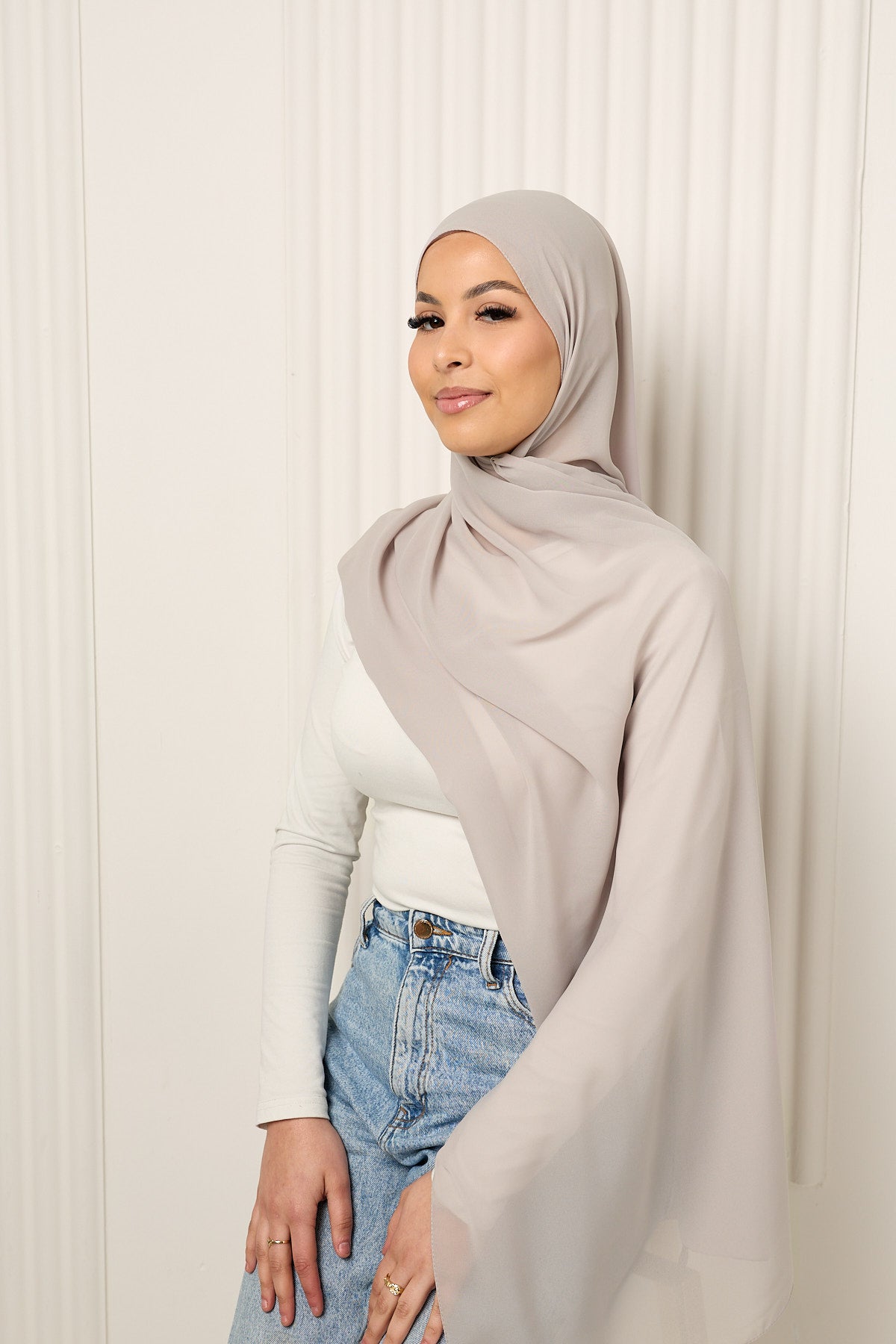
The Emirati Chiffon Hijab is butter-soft and featherlight, with a generous 200cm x 75cm length that gives plenty of room for a loose, breathable wrap. It's available in 12 refined colourways, and it's exactly the kind of piece chiffon's history would predict, elegant, soft-draping, and suited equally to daily wear and special occasions.
Chiffon in Abayas, Two Ways to Get Full Coverage

Chiffon's natural sheerness, the very quality that gives it that light, airy movement, means an abaya needs proper construction to guarantee full coverage. We cover this in detail in our honest guide to whether chiffon abayas are see-through, but the short version is that Alkareem London solves it two proven ways.
The Chiffon Abaya - Sofia is fully lined with nida beneath the chiffon, so the outer fabric keeps its soft drape while the lining handles coverage. It's finished with an attached belt and intricate beadwork through the cape, and includes a matching hijab, available in Pink, with a matching kids set too.
The Double Chiffon Abaya - Lana takes the other route, premium double chiffon, two layers of the fabric itself, for full coverage without a separate lining. It's a rich blue, four-piece set with leaf-style beadwork along the hem, perfect for anyone who appreciates subtle luxury.

The Maroon Chiffon Abaya - Arwa is built the same considered way, a lightweight, flowy double chiffon overlay that drapes gracefully while still delivering full coverage. What sets Arwa apart is the delicate pleated inner slip, adding a quiet, sophisticated texture beneath the outer layer. It's a complete set, outer abaya, inner slip, belt, and hijab, available in Maroon, with a matching kids set for coordinated family dressing. Well suited to weddings, festive gatherings, or simply elevated everyday wear.

Caring for Chiffon
Chiffon's fine weave rewards gentle handling. A cool hand wash and a low iron are generally the safest approach for any chiffon piece, and air drying flat or on a hanger rather than tumble drying is what keeps the drape looking as good after a dozen wears as it did on the first.
Frequently Asked Questions
What is chiffon fabric made of?
Originally, chiffon was made entirely from silk. Today, most chiffon is made from polyester, with silk chiffon still available as a more luxurious alternative, and rayon or nylon blends also used.
Is chiffon a good fabric for summer?
Yes, it's one of the best. Its lightweight, open weave allows excellent airflow, which is why it consistently ranks among the most breathable fabrics for warm-weather hijabs and abayas.
Is chiffon see-through?
Raw, unlined chiffon can be slightly sheer, particularly in pale colours, because of its fine, open weave. A well-constructed chiffon abaya solves this through full lining or double-layered fabric, and a chiffon hijab is worn as a single layer by design.
Why does chiffon suit beaded or embroidered pieces so well?
Its soft, slightly textured surface provides a forgiving base for handwork, and its fine weave lets beading and embroidery sit beautifully against the fabric without looking heavy or overworked.
Why Alkareem London
Alkareem London has been designing modest fashion in-house since December 2020, with every piece ethically made in Dubai. Each piece ships from the UK in 2-3 working days for £3.99, with returns and exchanges accepted on all items except sale.
Ready to explore chiffon for yourself? Shop the hijab collection or the abaya collection to find the piece that suits you.

A proper hijab guide for curly hair, why curls behave differently underneath one, and the fabric and styling changes that genuinely protect them.

Five hijab trends worth building your autumn wardrobe around, from the fabrics leading the season to the colours and prints defining it.

Everything worth knowing about wearing grey, why it works, how to style it by occasion, and our own hand-beaded grey abaya, the Khadeejah.

White abaya: a complete style guide, its history, what to check before you buy, how to style it, and our two picks, in white and off-white.

The complete work abaya guide, which colours, cuts and fabrics read as professional, plus our top office abaya picks.

Can a hijab cause acne? The real mechanism, acne mechanica, and the fabric and habit changes that genuinely help clear it up.

Open abaya vs closed abaya, the real differences in weather, colour, and everyday wear, plus our top picks in both styles.

Our top abaya picks for autumn, heavier fabrics, richer earth tones, and the pieces built for cooler weather, from corduroy to hand-beaded mustard.