
Jersey Hijab: Which One Is Right for You?

Jersey is the fabric most hijabis reach for without quite knowing why it works so well. It grips without pins, moves without clinging, and holds its shape through a full day in a way few other fabrics manage. None of that is an accident, jersey isn't woven at all, it's knitted, and that single structural difference is why it behaves so differently to chiffon, cotton or silk. This guide covers what actually makes jersey work, and which of our three, bamboo, liquid or Emirati, is the right one for you.
In short: jersey is a knitted, not woven, fabric, which is what gives it natural stretch, grip and drape. We make three versions, bamboo (sensitive skin, sustainability), liquid (fluid drape, subtle sheen) and Emirati (widest colour range, best value), each built around a different one of those qualities.
What Actually Makes Jersey Different
Most hijab fabrics, chiffon, cotton, silk, are woven, two sets of yarn interlocked at right angles on a loom. Jersey is built entirely differently. It's knitted on a circular machine, a single continuous yarn looped through itself again and again, the same basic structure as a jumper rather than a shirt.
- Stretch, a knitted structure has natural give a woven fabric simply doesn't
- Grip, the slight texture of the knit catches against hair rather than sliding over it, which is why jersey needs far fewer pins than a smooth, woven fabric like chiffon or silk-satin
- Breathability, jersey feels substantial but stays breathable and highly absorbent
- Drape, structured rather than falling completely flat
A Fabric With a Genuine Fashion Pedigree
The name isn't a marketing invention. Jersey fabric takes its name from the island of Jersey in the English Channel, where 19th-century fishermen developed the knitting technique to make workwear that was warm, soft and, crucially, elastic enough to move with them. For decades it stayed exactly that, practical, unglamorous, built for labour rather than looks.
Coco Chanel changed that. Working between the two World Wars, she was drawn to jersey's elasticity at a time when womenswear was still built around restriction, and used it to make clothes women could "live, breathe, feel comfortable and still remain young at heart" in. It's a fair description of exactly what jersey still does in a hijab today.
The Three Jersey Hijabs, Compared
| Fabric | Composition | Best for | Price |
|---|---|---|---|
| Bamboo Jersey | 95% bamboo, 5% spandex | Sensitive skin, sustainability, all-day breathability | £18.99 |
| Liquid Jersey | 93% polyester, 7% spandex | Fluid drape, subtle sheen, evening wear | £17.99 |
| Emirati Jersey | Jersey blend | Colour range, structured everyday drape | £9.50 |
Bamboo Jersey, the Considered Choice
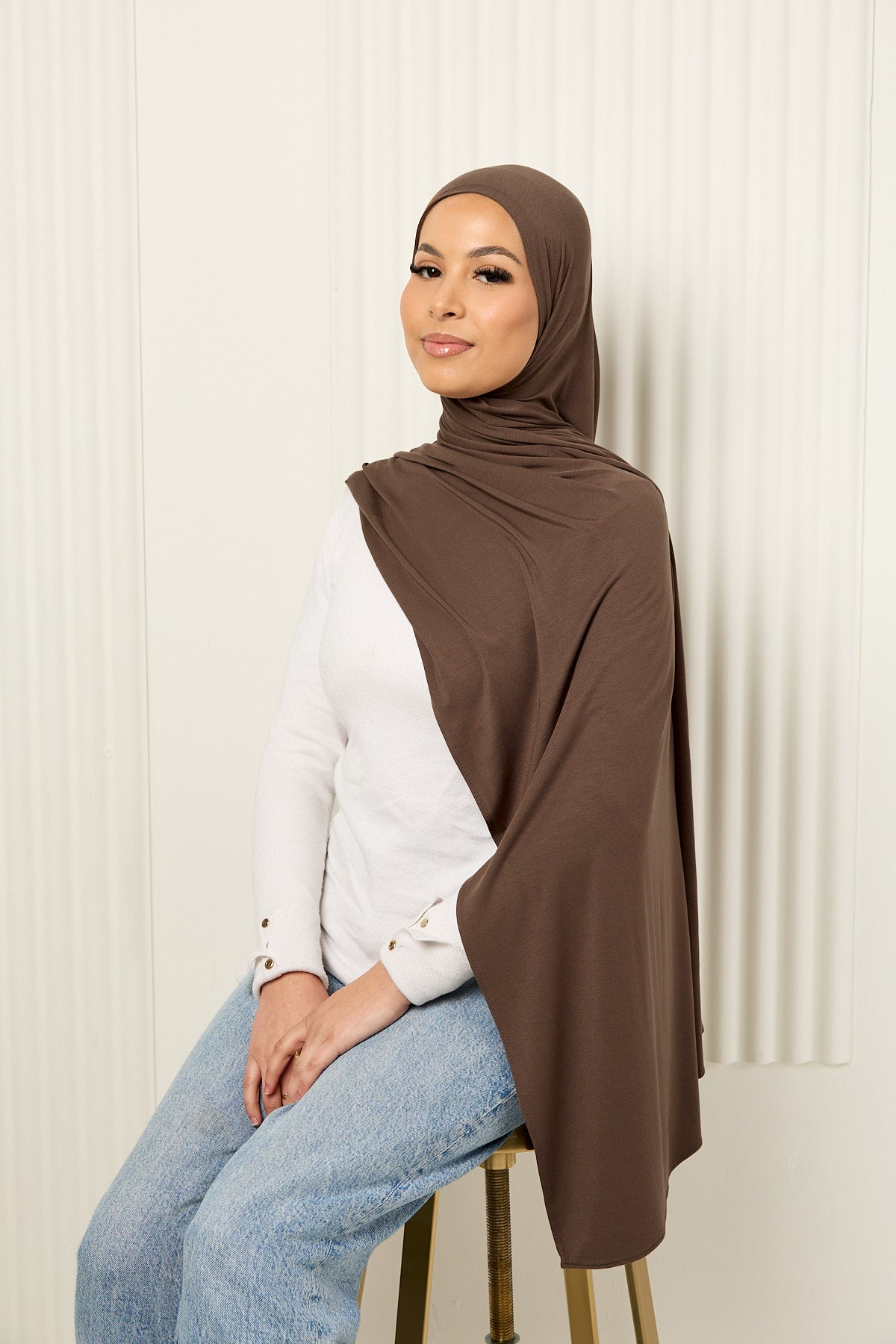
Bamboo jersey takes the fabric's natural properties and adds a genuine sustainability case on top.
- Hypoallergenic, highly moisture-absorbent and quick-drying
- Texture closer to silk or ultra-soft cotton than a typical jersey knit
- Natural UV protection, and holds its shape better than most alternative fibres over repeated washing
- Available in thirteen colours at 180cm x 70cm
We've written about bamboo's case in more depth, including why it's a gentler choice for hair health, in our full breakdown of why bamboo is worth choosing.
Liquid Jersey, for Fluid Movement
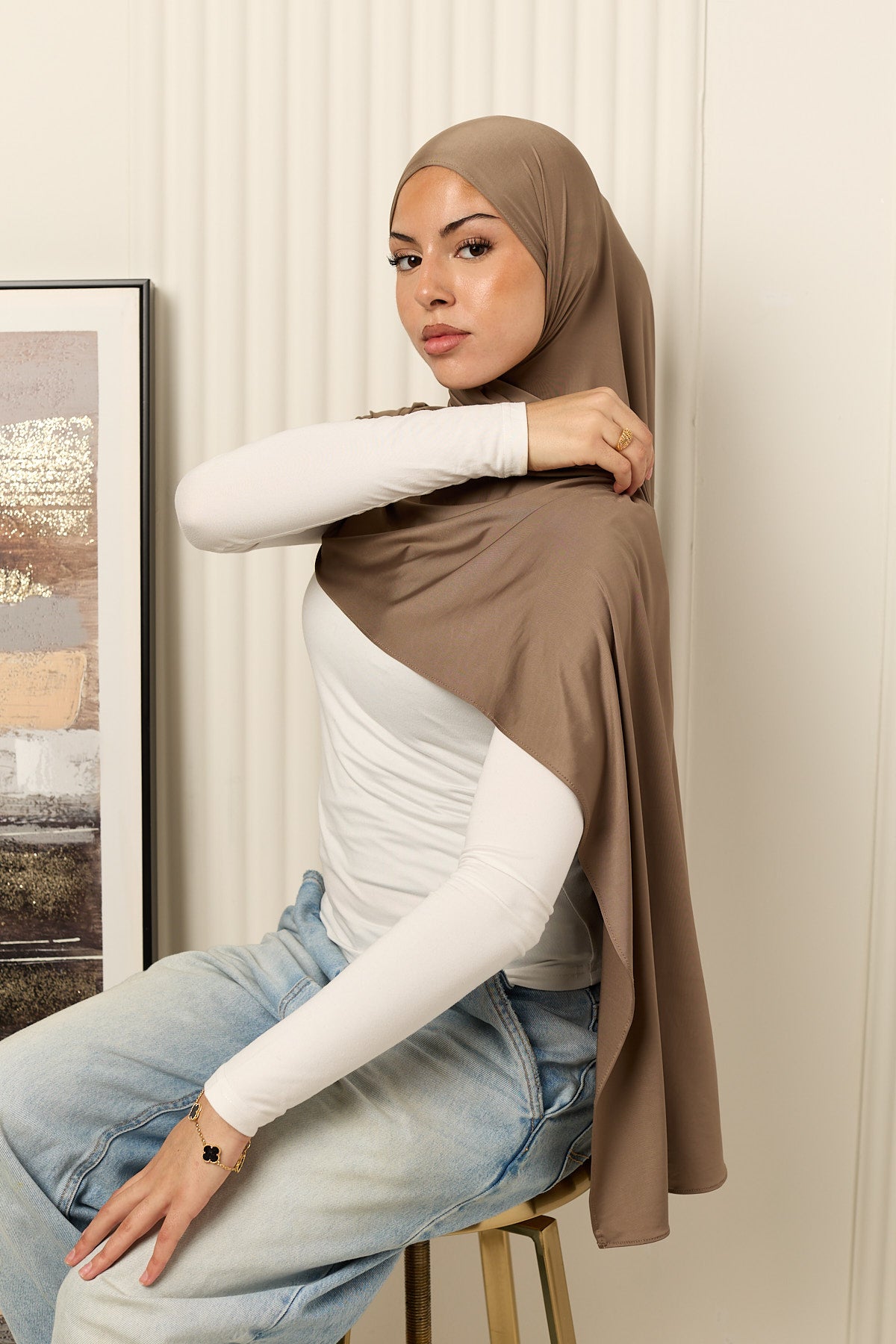
Where bamboo jersey is about substance, liquid jersey is about movement.
- Thin yet fully opaque, with a smooth, almost weighted drape
- A subtle sheen that catches the light without looking dressed up
- Sits between a crisp chiffon and a casual jersey, less structured than the former, more polished than the latter
- Works as well for an evening out as it does for a normal day
- Available in fifteen colours at 180cm x 70cm
Emirati Jersey, the Widest Colour Range


Emirati jersey is the most accessible entry point into the fabric, both in price and in choice.
- Forty colourways, from Burgundy to Oat and everything between, genuinely realistic to build a full jersey wardrobe across
- Same structured, ample drape jersey is known for
- Ethically made in Dubai
- Priced to make experimenting with colour an easy decision, from £9.50
See it styled step by step in our full Emirati styling guide.
Which Jersey Is Right for You
- Prioritising sensitive skin or sustainability? Bamboo jersey, hypoallergenic and moisture-wicking by nature.
- Want the most polished, fluid drape? Liquid jersey, with a subtle sheen that suits evening wear as well as daily.
- Building out colour options without spending heavily? Emirati jersey, forty shades at the most accessible price point.
- Prone to slipping or reaching for pins constantly? Any of the three will need noticeably fewer than a woven fabric, jersey's knit structure is what grips in the first place.
Styling and Care
- Wrap looser than you think you need to. Jersey's grip means a looser wrap generally holds as well as a tightly pinned one, worth knowing if you're over-securing out of habit built up with other fabrics
- Wash cool, dry flat. A cool machine wash and air drying keeps jersey's shape and stretch intact for longest
- Avoid high heat. It can affect the spandex content over repeated washes
If slipping is still a concern despite the fabric, it's usually about wrap technique rather than the jersey itself, our full guide to stopping a hijab from slipping goes through this in more detail. And if you're building an autumn wardrobe around jersey specifically, our seasonal colour guide maps out which shades are having a moment right now.
Frequently Asked Questions
What is jersey hijab fabric made of?
It depends on the specific jersey. Ours range from 95% bamboo with 5% spandex to 93% polyester with 7% spandex, but all jersey is knitted rather than woven, which is what gives it stretch and grip regardless of fibre content.
Is jersey a good fabric for hijab?
Yes, particularly for anyone who finds woven fabrics like chiffon or silk-satin difficult to keep in place. Jersey's knit structure grips naturally, which means fewer pins and less repositioning through the day.
What's the difference between jersey and modal hijab?
Jersey is knitted, which gives it natural stretch and grip. Modal is typically a smoother, more fluid woven or fine-knit fabric with a softer, more sheer drape, closer in feel to a lightweight viscose. Jersey tends to hold its shape more; modal tends to move more.
Does a jersey hijab need pins?
Generally, no. Jersey's textured knit surface creates natural grip against hair, which is why it's one of the few hijab fabrics that reliably holds a wrap without pinning.
Why Alkareem London
We make three distinct jersey hijabs rather than one, because bamboo, liquid and Emirati jersey solve genuinely different problems. Each is chosen for how it behaves through a full day, not just how it photographs, and that's the same thinking behind everything else we make. Shop the full hijab collection here.

A clear guide to our six kids abayas, which one suits school and everyday wear, which is right for a wedding, and which works for photos.

A proper hijab guide for curly hair, why curls behave differently underneath one, and the fabric and styling changes that genuinely protect them.

Five hijab trends worth building your autumn wardrobe around, from the fabrics leading the season to the colours and prints defining it.

Everything worth knowing about wearing grey, why it works, how to style it by occasion, and our own hand-beaded grey abaya, the Khadeejah.

White abaya: a complete style guide, its history, what to check before you buy, how to style it, and our two picks, in white and off-white.

The complete work abaya guide, which colours, cuts and fabrics read as professional, plus our top office abaya picks.

Can a hijab cause acne? The real mechanism, acne mechanica, and the fabric and habit changes that genuinely help clear it up.